

Modeling and simulation of physical–biological systems using continuous and particle-based techniques
We use computational modeling and numerical simulations to investigate how physical interactions and biological activity shape the behavior of complex systems across different length and time scales. Our approach combines methods ranging from continuum models and numerical solutions of partial differential equations to particle-based simulations, including Monte Carlo, Molecular Dynamics, Dissipative Particle Dynamics and Active-Particle models. A central tool in our computational work is LAMMPS (Large-scale Atomic/Molecular Massively Parallel Simulator), a highly versatile open-source simulation package originally developed for molecular and materials modeling. Its modular structure allows us to go beyond traditional atomistic simulations and study a wide variety of soft-matter and active-matter systems, including colloids, self-propelled particles, complex fluids and confined biological microswimmers. We can incorporate different interaction potentials, thermal fluctuations, hydrodynamic effects, external forces and torques, as well as customized models tailored to specific physical or biological processes. By combining these numerical tools with experimental observations, we aim to develop models that not only reproduce observed phenomena, but also help us identify the physical mechanisms governing the organization, transport and dynamics of living matter.
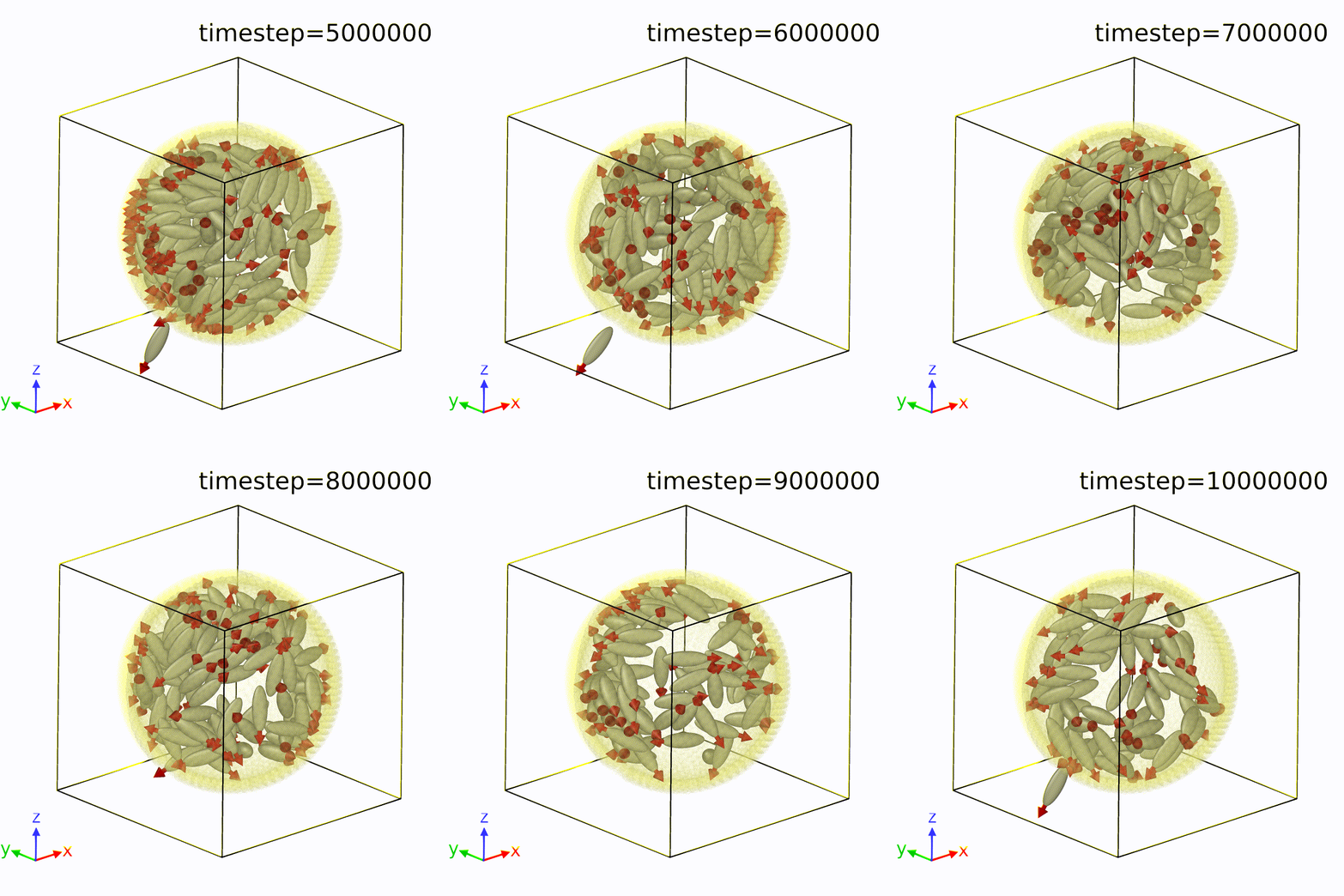
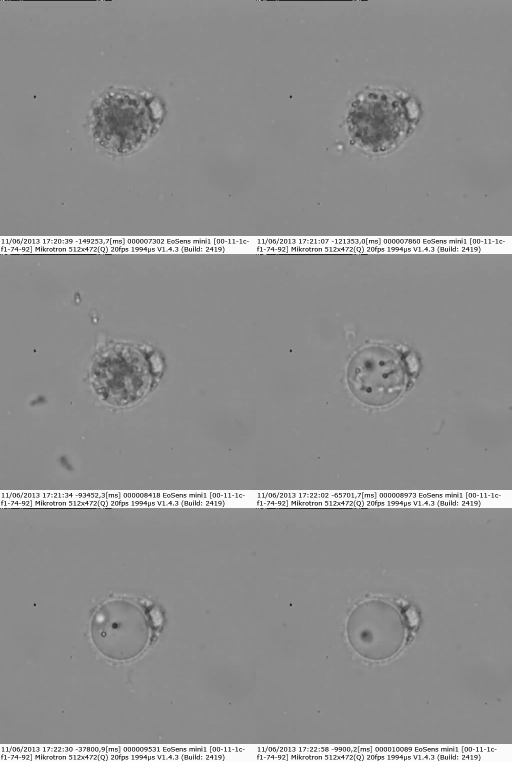
Modeling of narrow escape of Parvilucifera‘s parasitoids from an sporangium.